
1872–1944 · United States · Cinematographer
Billy Bitzer
Silent-era pioneer of lighting, close-ups, iris shots and matte photography.
The Birth of a Nation, 1915Source: Wikipedia
CINEMATOGRAPHER · 1893–1977 · GERMANY
Mirror tricks turned into poetic, smoky realism.
KNOWN FOR
WHY THEY MATTER
Inventor of the Schufftan process used on Metropolis; Academy Award for the black-and-white photography of The Hustler.
THE LIFE
Schufftan was born in Breslau, then in Germany, and started out as a painter and architect. In the 1920s he devised a way of combining actors with miniature sets through angled mirrors, a technique that carried his name and was used on a large scale in Fritz Lang's Metropolis. He then worked as a cameraman, shooting People on Sunday in Berlin before the Nazis drove him to France, where he filmed Marcel Carne's Port of Shadows. In the United States he long struggled for union recognition, then won an Oscar for The Hustler. He died in New York in 1977.
1872–1944 · United States · Cinematographer
Silent-era pioneer of lighting, close-ups, iris shots and matte photography.
The Birth of a Nation, 1915Source: Wikipedia

1886–1981 · United States · Cinematographer
Soft-focus pictorial photography carried into film, and early 3-D.
Sunrise: A Song of Two Humans, 1927Source: Wikipedia
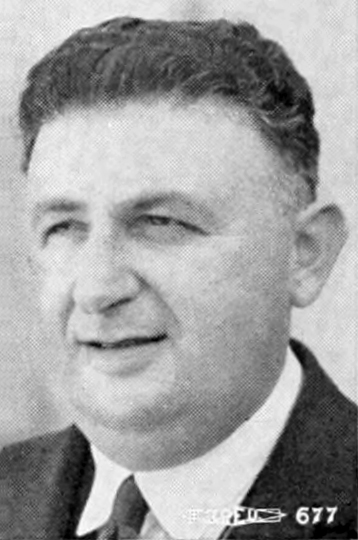
1890–1969 · Germany · Cinematographer
The 'unchained camera' of German Expressionism, later studio Hollywood polish.
The Last Laugh, 1924Source: Wikipedia

1898–1978 · United States · Cinematographer
Sculpted studio lighting across silent and sound eras.
Shanghai Express, 1932Source: Wikipedia

1899–1976 · United States · Cinematographer
Low-key lighting, deep shadow and wide-angle lenses.
Sweet Smell of Success, 1957Source: Wikipedia